Analytics

Monday, October 6, 2014

Bring Your Houseplants Inside but Leave the Bugs Outside Part 2


I have to admit-this is a tedious job.  Sometimes I consider just hauling the darn things in and not worrying about any bugs that might come with it.  But then I remember a few years ago I had 3 Banana plants (along with some other plants) that I had brought inside without cleaning them up.  Guess what-they died that winter from a spider mite and scale infestation and the rest of my plants barely made it through the winter.  I battled the bugs the entire time.  So now I make it a Fall ritual no matter how much I hate it.  This system does not guarantee my plants stay healthy, but I have not had a problem since I started doing this.  Here is a picture of one of my long gone Bananas:

This post is the second part of a post I wrote Titled "Bring Your Houseplants Inside but Leave the Bugs Outside".  Here is a link to that post if you would like to visit it and check it out before you start: http://sproutsandstuff.blogspot.com/2014/09/bring-your-houseplants-inside-but-leave.html

For this you will need the following:
1.  Large plastic tub-large enough to fit you plants pot. 
2.  Dawn dishwashing detergent.
3.  Epsom salt
4.  A sponge
5.  Hose with sprayer.
6.  A spray bottle

First thing you need to do is fill the large tub up with water.  Add a couple of squirts of Dawn and a handful of Epsom salts as it is filling.  When it is about halfway full place your plant in the plastic tub.  Get some help with this-you don't want to throw your back out.  I had my 16 year old son help me.  When the plant is in the water fill the tub up until it is over the top of the pot.  Some of your dirt will start to float out of the pot-this is normal if your plant hasn't been in the pot very long.  You will leave the plant in the water anywhere between 15 and 30 minutes.  Here is my plant sitting in the tub:


During that time fill the spray bottle with water.  Add a dash of Dawn and a pinch of Epsom salts. 
Now, spray the plant down with the spray bottle-make sure to spray the upper and lower leaves and also the stems.
After you have sprayed the entire plant down grab the sponge and start wiping the plant down.  I usually wipe the upper then the lower leaves then the stems (as much as I can).
When the plant is all wiped down spray it off with the hose.  Make sure to get it completely rinsed off.
If it has been at least 15 minutes or longer you can remove the pot from the "bath".  Make sure to get help with this-the plant will be much heavier now that it has absorbed a bunch of water.

Wipe down the pot and then rinse off.
Let the plant drain completely before bringing in to the house.  I always try to acclimate the plant so it doesn't go into shock.  That usually means bringing it in at  night and reducing the amount of daylight hours it has outside for about a week before I leave it inside for the winter.  Here is my plant in his winter home:
For some reason my Schefflera is getting wide instead of tall.  It is starting to take up too much room.  Anyways, here is a pic of another plant I gave a "bath".  His pot barely fit in the plastic tub.
Another bonus about soaking your plants in the water is they get a thorough watering before bringing them in.  Remember to cut back on watering when you bring them in.  Less sun, wind and growing means less need for water.  Here's hoping they make it through another winter indoors:-))

I hope you find this post useful.  If you have any questions feel free to contact me or leave it in the comments section.

As always-Happy Planting!
Rhonda


Sunday, September 28, 2014

Bring Your Houseplants Inside but Leave the Bugs Outside

It is that time of year again-time to bring in all the houseplants  If you are like me you have had your houseplants outside adorning your deck and front door area giving them a little vacation from being cooped up inside.  Unfortunately it is starting to get cooler and that means I have to start bringing them in before the nighttime temperatures get below 45-50 degrees.  Before I bring them in there are  some steps I take to ensure I don't also bring in hitchhikers.  Not only can I bring in spider mites and aphids there is also the fear of other creepy crawlies like millipedes and spiders that I really don't want in the house.  These steps I take help to keep the bugs to a minimum and I don't need to use pesticides to do it. 

Step 1:  Give the plant a "bath"!  I take a large tote and fill it with water and add a few squirts of Dawn dishsoap and a handful of Epsom salts.  I then sink the potted plant into the "bath" for 15-30 minutes to force out any bugs that might be making the plant home.  


Step 2:  After 15-30 minutes remove the plant.
Step 3:  Spray the plant off with a good stream of water to remove the soap.
Step 4:  Take a sponge or rag and wipe down the pot and then rinse off.

Step 5:  Remove any dead /dying foliage or flowers.  Inspect for bugs under leaves and along the stem.  Repeat the bath if the bugs are not all gone or use a sponge and wipe them off gently then spray again with the hose. 

Step 6:  Let drain completely.  Now they are ready to be taken back inside. 
Step 7:  Reintroduce them slowly to the indoors especially if they were in full sun.  I do this by moving them indoors at night and putting them out in the morning-reducing the amount of time outside daily by an hour or two.  It usually takes about a week. This helps to reduce shock. 

Step 8:  Enjoy you plants!  For the first month your plants may drop some leaves-this is common and caused by the shock of moving back inside but it should recover given time.  Just make sure to cut back on fertilizer, give it enough light and water when needed (don't over water) and your plants should make it through the colder months to enjoy another summer outside. 

This works great for most houseplants except large ones.  My next post I will show you how I prepare my large houseplants for moving inside. 

Until next time-Happy Planting! 

Rhonda

Thursday, September 18, 2014

Easy and Cheap DIY Concrete Pumpkin Planter

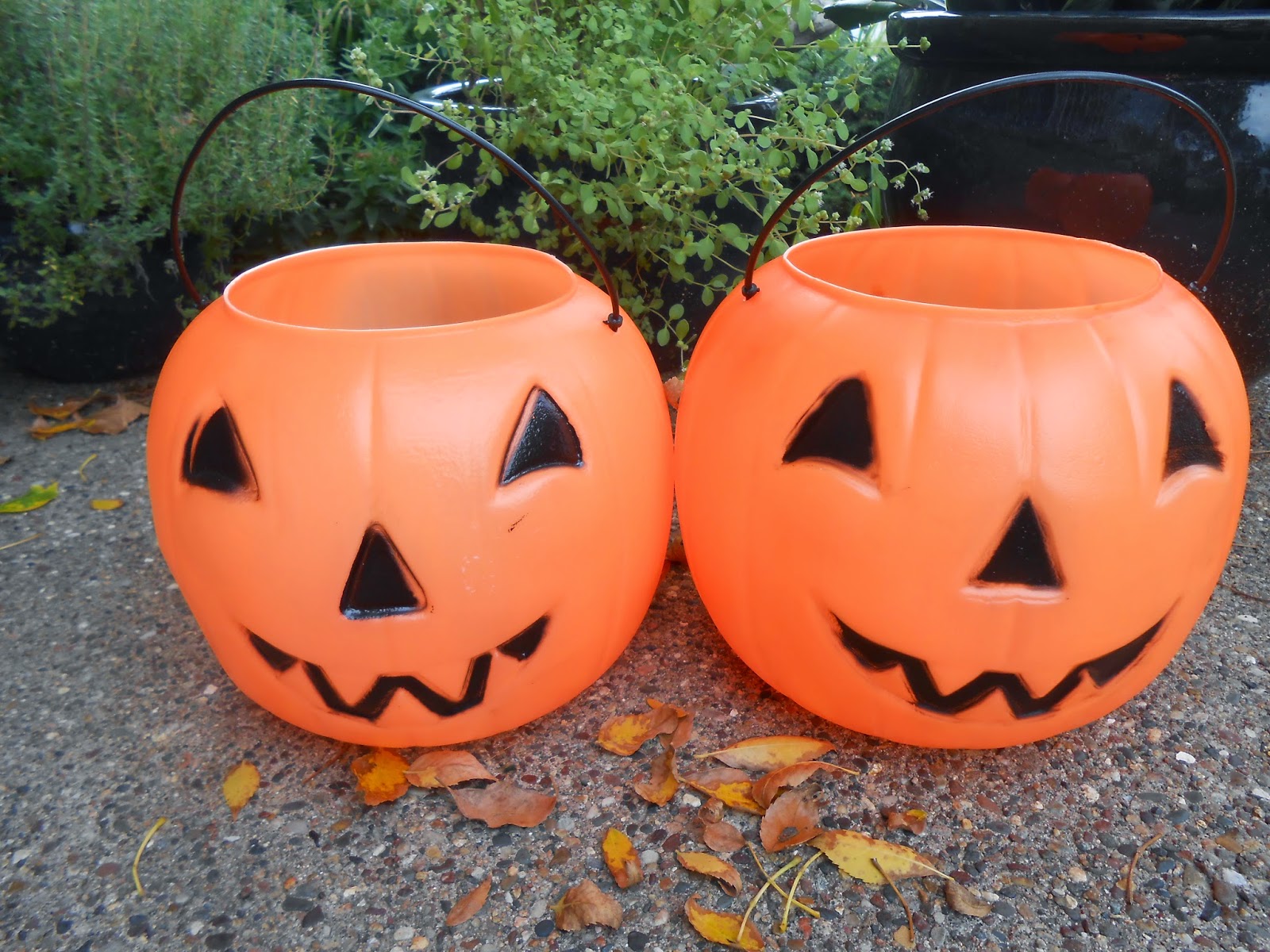
Ever look at one of those plastic candy buckets and wonder what the heck can I do with this?  Here is a picture of what I am talking about:
Candy buckets
 Turn it into one of these:
Concrete pumpkin
Concrete pumpkin

Since my kids are too old for these now I was looking to re-purpose the ones I have into something interesting.  At least interesting to me:-))  So, since I like working with all things concrete I decided to turn mine into concrete planters.  I had seen similar ideas on pinterest using a styrofoam pumpkin-but I didn't have one of those:-))  Now don't worry-this is easy-even for uncrafty people like me!  Another plus is that it is really cheap.  If you already have the pumpkins on hand you are in luck but if you buy them they are less than $1 a piece.  If you use a sack of pre-mixed concrete (the cheap stuff) it will cost under $3 and it will do 2 planters.  So, if you do 2 of these it will cost less than $5!  Let's get to work creating.

For this project you will need:

1.  One bag of concrete mix or your favorite concrete/hypertufa recipe
2.  2 plastic pumpkin pails
3.  a tub to mix the concrete
4.  Something to mix with-I use my hands or a hand hoe.
5.  Cooking spray
6.  water
7.  An inner mold-a couple of tall cups or similar will work
8.  Something to create a drainage hole-I used a couple of squares (about 1in) of styrofoam that I cut from a big piece.  It has to be "tall" enough for the inner mold to sit on.
 9.  A mask and a pair of gloves (work safe).
If you want to make a reusable mold you will also need:

10. Some duct tape
11. A sharp cutting instrument-I used an exacto knife to cut the pumpkins in half.

After you get all your supplies together we can begin.  The beginning of the instructions will show you how to make a reusable mold if you prefer to just make a pumpkin once then skip down to step 4.

1.  Start by taking a sharp instrument and cut along the "seam" of the pumpkin (which should be on the side not through the face of the pumpkin.  I did the bottom first them the sides like this:
When you are done cutting it should look like this:
2.  Cut off the handle:
Now it is ready to tape back together!
3.  Hold the pumpkin together and begin taping-use smaller pieces of duct tape at first to get a start then you can use bigger pieces to completely tape it back together.  Also-starting at the bottom is easier (at least I thought so).

Tape the bottom up really good!
When you are done they should look like this:
Now we are ready to go!
4.  Spray the inside of the pumpkins and your inner mold with cooking spray or some other mold release-I usually spray it in then wipe it around on the inside.  Also fill your inner mold with some rocks or sand to weigh it down.

5.  Take your styrofoam "spacer and put it down in the middle of the bottom.
6.  Mix up your concrete according to the directions-remember not too much water!
7.  Let it sit for a few minutes if it is NOT quick setting concrete.  If it is quick setting you can begin to fill.
8.  Fill the bottom of the pumpkin but don't cover the styrofoam cube-just fill around it like this:
9.  Set your middle form on top of the cube making sure it is centered (or close):
10.  Fill up the rest of the way pressing it down as you go.  I use an old dowel I have laying around just for this:
11.  When filled to the top Tap on the sides with your hands for about a minute to help release some air bubbles then let it sit and harden for 24-48 hours.  Don't unmold too early or it might fall apart.

12.  When it has hardened you can remove the mold.  If you don't care about keeping the mold just cut off the pumpkin.  If you have taped it up to reuse it all you need to do is cut off the tape.

13. After you unmold it you need to knock out the styrofoam cube in the bottom.  I used a mallet and my trusty dowel for this:
14.  Pull the middle out or keep tapping with the mallet until it releases.  If it is still difficult let it sit in the sun for a while-sometimes that helps.
Here it is ready to cure:
15.  Let it cure for about a week.  You can either put it in a grocery sack and mist it daily or you can fill a container with water and let it soak.  I prefer the water bath:
16.  After a week or two remove the pumpkin from the water bath and let dry.
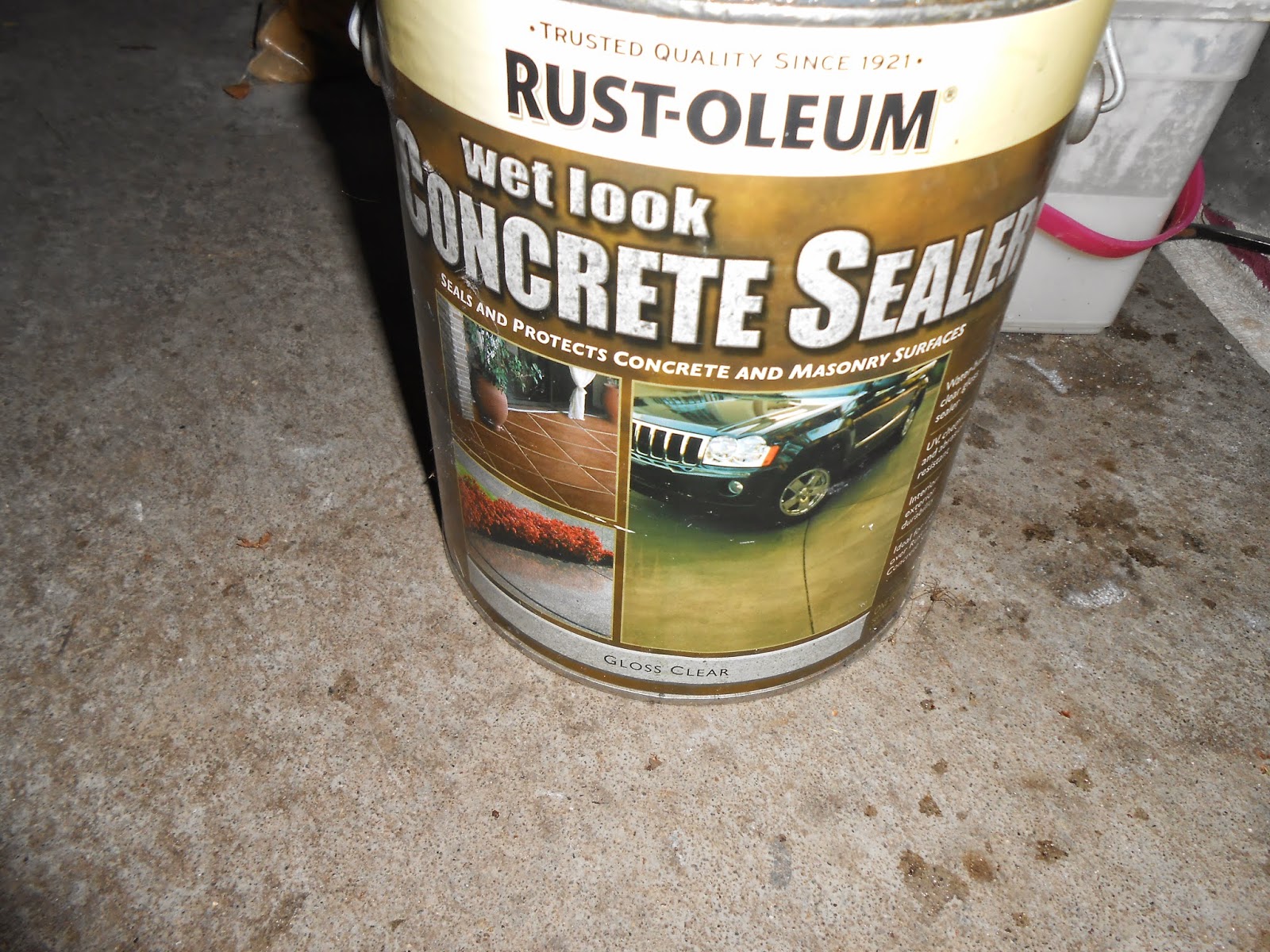
17.  Seal or paint to your liking-I used rustoleum wet look sealer on mine.  Glow in the dark paint would be really cool!

18.  Plant it up and set it out in your garden or on your steps.  Here is a picture of mine out in my garden:
Concrete pumpkin planter

Concrete pumpkin
I hope you enjoyed this project and remember that you can paint, stain or seal this project any way you want.  Use your imagination!  I really think the glow in the dark paint would be cool-especially if it was just the eyes.  Also, if you made "molds" remove all the tape and wash the inside out really well.  I use Dawn for this.  Don't worry about the outside just the inside and make sure to try and remove any residual concrete then just store until ready to use again.  Good Luck and if you have any questions or comments just leave it below.


Until next time-Happy Planting!

Rhonda